Your AI Agents Are Ready. Is Your Infrastructure?
How Model Context Protocol connects enterprise AI to the infrastructure responsible for delivering, protecting, connecting, and monitoring business-critical applications.
AI is getting smarter. But does it understand your infrastructure?
Artificial intelligence has become increasingly capable. AI assistants can write code, analyze complex information, summarize documents, and answer technical questions in seconds.
But there is a significant difference between an AI assistant that understands technology and one that understands your infrastructure.
Imagine a business-critical application suddenly becomes unavailable. Your AI assistant may be able to explain the possible causes of an outage. But can it tell you which servers are unhealthy, whether DNS is resolving correctly, or if a security policy is blocking legitimate traffic?
Without access to operational information, even the most sophisticated AI agent is limited in what it can accomplish.
Modern enterprise applications depend on a complex combination of load balancers, application delivery controllers, DNS services, cloud networks, security controls, and monitoring systems. Each generates valuable operational data, but that information is often spread across separate dashboards, management interfaces, and APIs.
The next opportunity for enterprise AI is not simply making models more intelligent. It is giving them secure, governed access to the systems that keep businesses running.
This is where Model Context Protocol (MCP) becomes important.
What is Model Context Protocol (MCP)?
Model Context Protocol is an open standard that enables compatible AI applications to communicate with external tools, services, and data sources through a consistent interface.
Traditionally, connecting an AI application to enterprise systems required developers to build and maintain individual integrations. Each new connection introduced additional complexity, maintenance requirements, and security considerations.
MCP provides a more standardized approach.
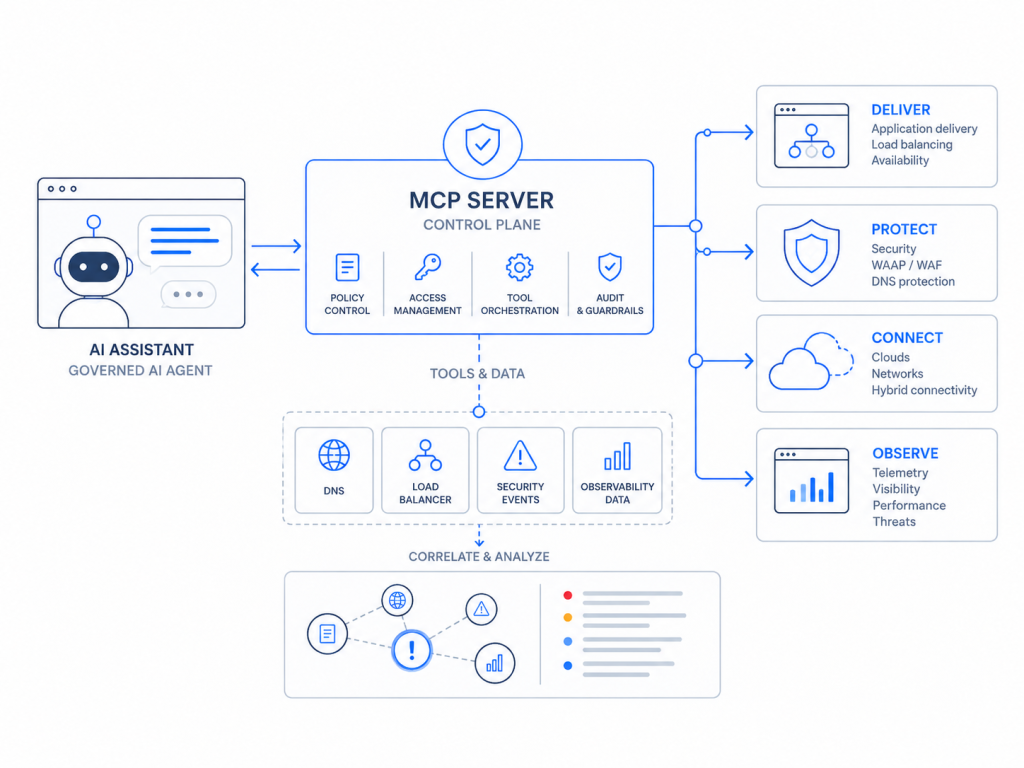
It introduces three components:
- – MCP Host: The AI application where the user or agent operates.
- – MCP Client: The component that manages communication with an MCP server.
- – MCP Server: The service that exposes defined tools, resources, and reusable prompts to compatible AI applications.
Through MCP, an authorized AI assistant can request information or invoke approved functions without requiring a completely separate integration for every capability.
For example, an assistant could potentially retrieve application health information, examine DNS configurations, or review available security events through approved MCP tools.
There is one important distinction: MCP is not an AI model, and it does not automatically make an integration secure.
Authentication, permissions, access policies, approvals, and operational safeguards must be implemented around those connections.
For enterprise infrastructure, that distinction is essential.
Connecting AI to the entire application delivery environment
An application rarely depends on a single technology.
It must be delivered efficiently, protected against threats, connected across networks, and monitored for availability and performance.
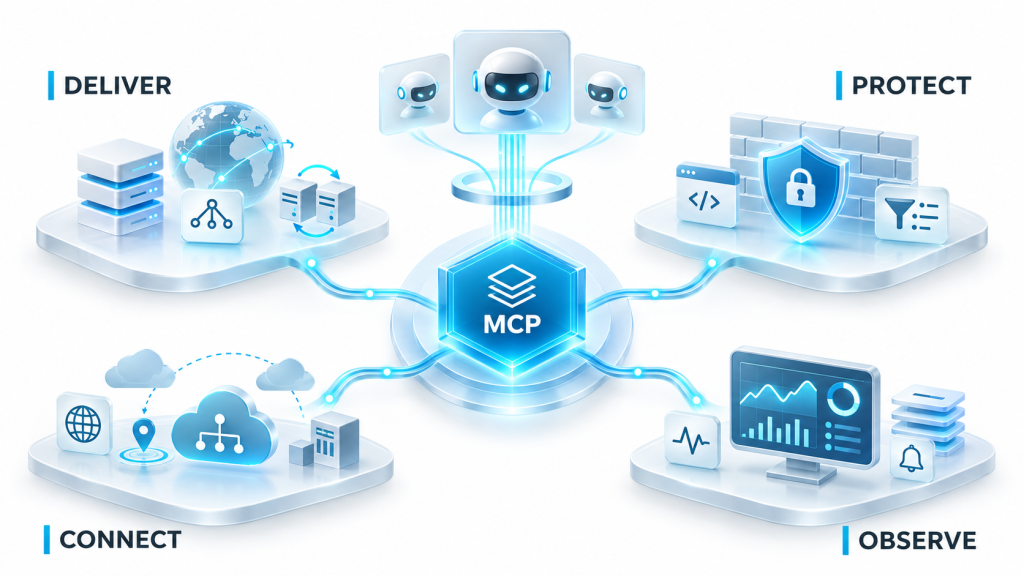
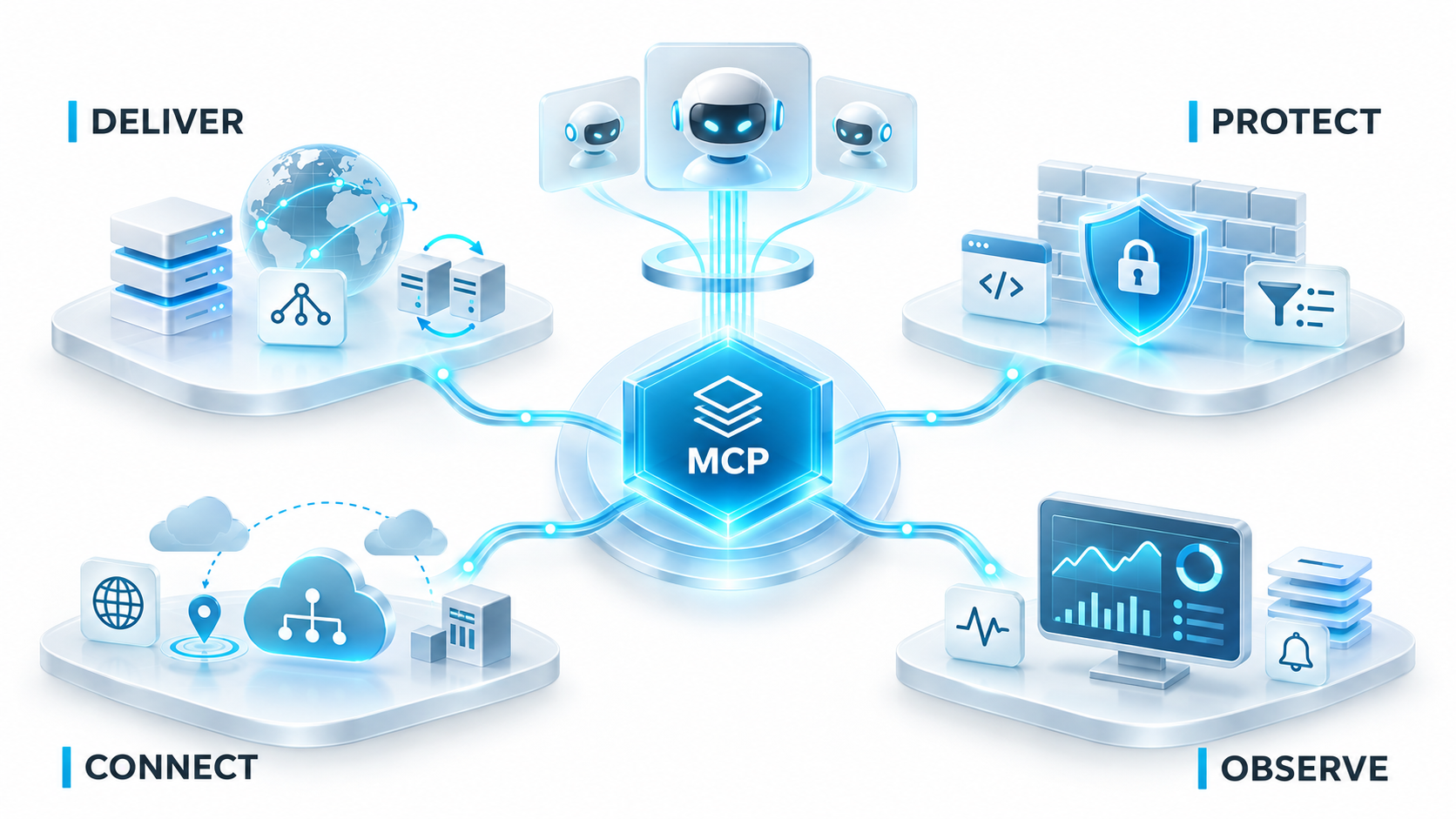
At Total Uptime, we approach these responsibilities through four connected capabilities: DELIVER. PROTECT. CONNECT. OBSERVE.
Together, they provide a practical framework for understanding where AI-assisted infrastructure operations can add value.
DELIVER: Understand how applications reach users
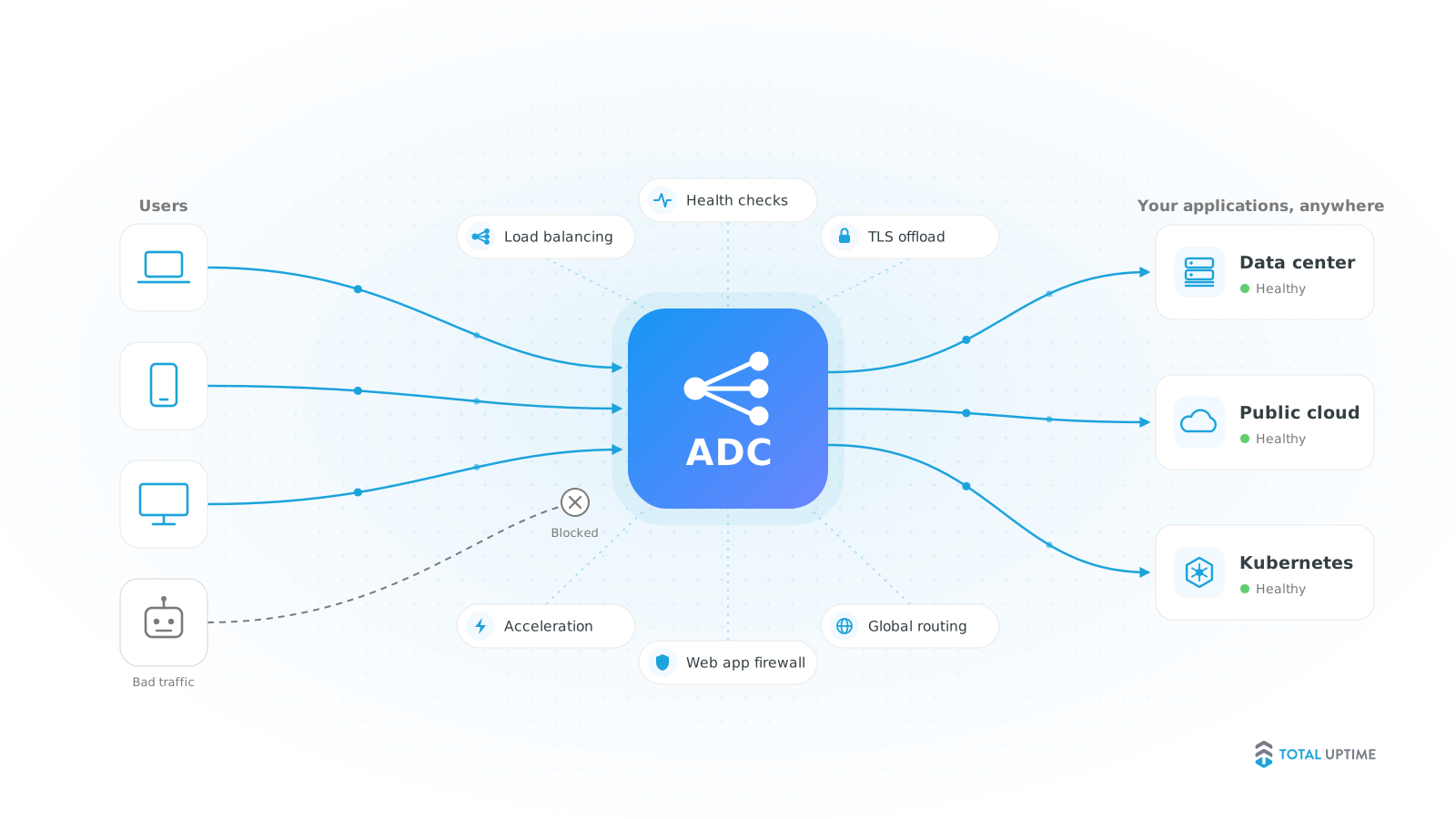
Application Delivery Controllers (ADCs), load balancers, and Global Server Load Balancing (GSLB) services determine how traffic reaches applications and how infrastructure responds when individual servers or locations become unavailable.
These technologies generate information about server health, traffic distribution, application performance, and failover activity.
Imagine asking an AI assistant:
“Which application services are experiencing problems, which regions are affected, and what changed before performance started deteriorating?”
With approved access to load balancing and application delivery information, an MCP-connected assistant could retrieve relevant health and configuration data to support the investigation.
Instead of manually collecting information from multiple interfaces, an engineer could begin with a more complete picture of the problem.
PROTECT: Connect security intelligence with application health
Security controls such as Web Application Firewalls (WAFs), Web Application and API Protection (WAAP), and API security services generate valuable information about attacks, suspicious requests, and access patterns.
But security events do not always tell the complete story.
Consider an application experiencing an unusual increase in failed requests. Is the application struggling under load, or is a security rule unintentionally blocking legitimate users?
An authorized AI assistant could help investigate by comparing available security events with application health information.
By connecting application and API protection data with operational context, infrastructure and security teams could investigate incidents more effectively.
Any changes to security policies, however, should remain subject to appropriate authorization, review, and verification.
CONNECT: Understand the networks behind the application
An application can be functioning perfectly at the server level and still be unavailable to users.
The problem may lie with DNS resolution, network routing, connectivity between cloud environments, or an unavailable network path.
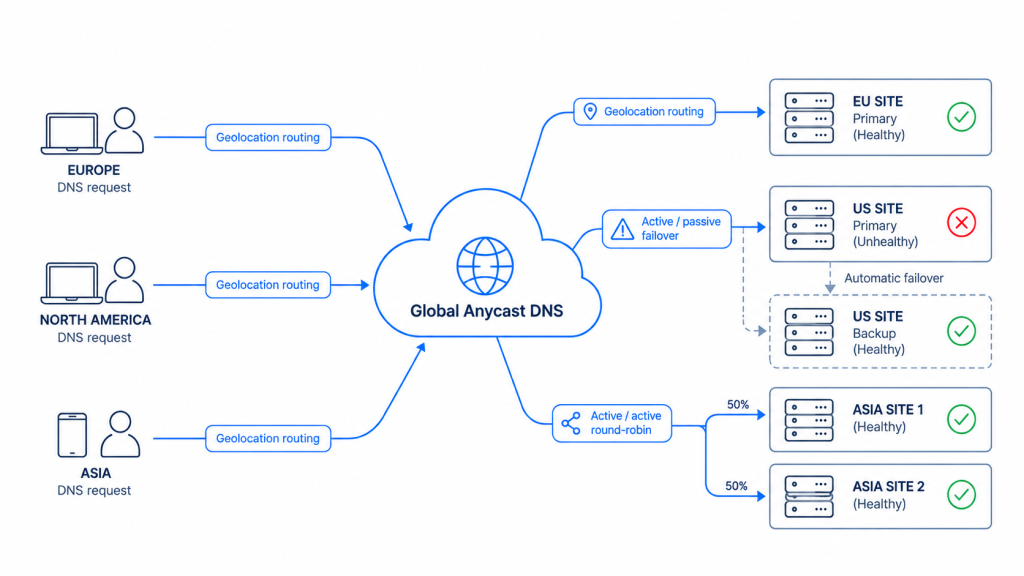
Services such as Cloud DNS, Anycast, and multicloud networking all contribute to application availability.
Through appropriately scoped MCP tools, an AI assistant could help examine available connectivity information, identify potential points of failure, and highlight dependencies that require investigation.
This becomes especially valuable in hybrid and multicloud environments, where applications rely on infrastructure distributed across different providers, networks, and geographic locations.
OBSERVE: Turn monitoring data into meaningful operational insight
Monitoring systems continuously collect metrics, logs, events, and health information.
The challenge is not always a lack of data. It is the time required to understand what that data means.
AI can help engineers identify patterns, summarize anomalies, and examine relationships between operational events.
MCP makes it possible to expose approved observability capabilities to compatible AI applications, allowing monitoring information to become part of a broader investigation.
The objective is not to replace monitoring platforms. It is to help teams make better use of the information those platforms already provide.
From four separate systems to one operational conversation
The real value emerges when information from these different domains can be considered together.
Imagine European customers begin reporting intermittent failures when accessing a business-critical application.
In a traditional environment, engineers might need to investigate several systems independently, often involving different teams.
With an appropriately configured MCP environment, an authorized AI assistant could support a more connected investigation:
DELIVER: Retrieve available application health and load-balancing information to identify unhealthy services or affected traffic paths.
PROTECT: Examine relevant security events to determine whether requests are being blocked or unusual activity coincides with the failures.
CONNECT: Check DNS, routing, and network connectivity information for potential regional problems.
OBSERVE: Correlate available monitoring events, configuration changes, and timestamps.
RECOMMEND: Present a prioritized assessment, identify supporting evidence, and suggest the next diagnostic steps for an engineer to review.
These capabilities depend on the tools, permissions, and data sources available to the AI application.
The assistant may identify that application failures coincide with a DNS change or an increase in blocked requests. That does not automatically establish the root cause. Engineers still need to assess the evidence and validate the conclusions.
The opportunity is not simply allowing AI to issue commands. It is making the evidence behind operational decisions easier to access and understand.
Is your enterprise infrastructure ready for AI agents?
Before introducing AI agents into production infrastructure, organizations should consider several important questions.
Can AI access reliable operational information?
AI-assisted investigations depend on the quality and availability of underlying data. Incomplete monitoring, outdated records, or disconnected systems can limit the usefulness of an agent’s findings.
Do you know which systems AI should be allowed to access?
Not every AI assistant needs access to every infrastructure service. Permissions should reflect clearly defined operational requirements, with read-only access as the starting point wherever possible.
Can AI-generated findings be verified?
Infrastructure teams need to understand where information came from, when it was collected, and which evidence supports a recommendation. AI-generated conclusions should be treated as findings to validate, not unquestionable facts.
Are your security and governance controls sufficient?
Connecting AI to operational systems introduces risks involving sensitive information, unauthorized access, prompt injection, malicious tool responses, and inappropriate actions.
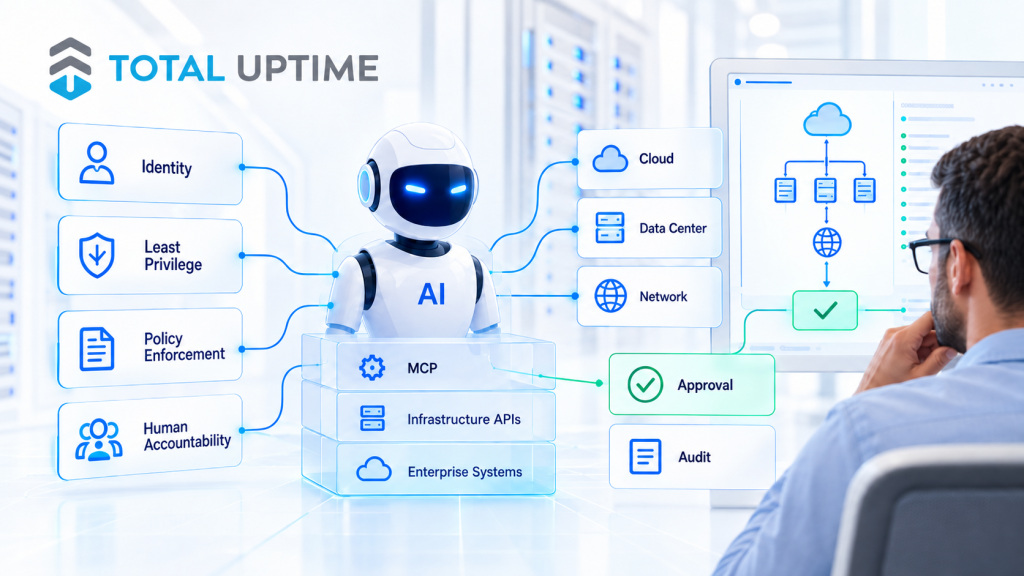
Identity management, authentication, authorization, audit trails, and policy enforcement must be part of the architecture.
Who remains accountable for production changes?
AI may recommend an action, but responsibility for approving, executing, and verifying changes must remain clearly defined.
These considerations are not reasons to avoid AI integration. They are the foundations for introducing it responsibly.
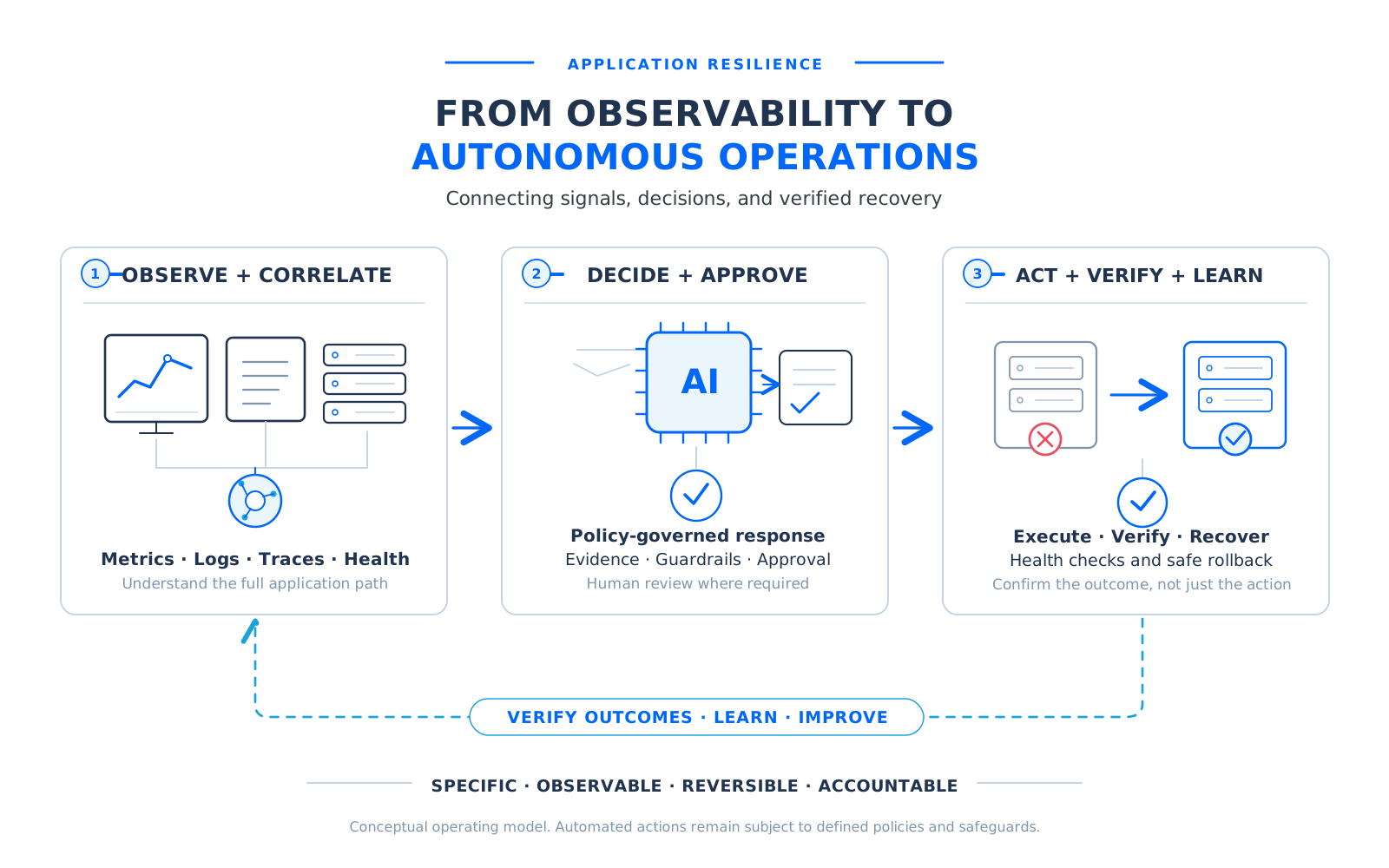
From AI assistance to governed automation
Giving an AI agent access to production infrastructure should not mean giving it unrestricted control.
A sensible adoption strategy introduces capabilities gradually as organizations establish confidence in the technology, the underlying information, and the safeguards surrounding it.
Total Uptime’s MCP approach reflects three stages of operational maturity.
1. ASSIST: Read-only investigation
AI can retrieve approved information, answer operational questions, and support incident investigations without changing production configurations.
This offers a practical starting point for organizations exploring MCP-enabled operations.
2. GUIDE: Evidence-based recommendations
AI can examine operational information and recommend possible actions, while engineers retain responsibility for reviewing and approving the appropriate response.
Recommendations should include supporting evidence and acknowledge uncertainty where it exists.
3. AUTOMATE: Approved and verified workflows
As operational confidence grows, organizations may introduce narrowly defined automated actions.
These workflows should operate within established policies, permissions, and approval requirements, with appropriate testing, auditing, verification, and rollback procedures.
The goal is controlled automation, not unrestricted autonomy.
For organizations considering this progression, AI agent governance is just as important as the underlying integration technology.
What business value should enterprises expect?
For CIOs, CTOs, and CISOs, the business case for MCP should be measured by improvements in operational performance, not simply the number of AI tools connected.
For a CTO, the opportunity may be reducing the time engineers spend gathering information during an incident.
For a CIO, it may mean more consistent operational processes and greater value from existing technology investments.
For a CISO, the priority may be improving operational visibility while maintaining clear boundaries around sensitive information and privileged activities.
Organizations evaluating MCP-enabled operations should consider measuring:
- – Mean time to detect, investigate, and resolve incidents.
- – Time spent manually collecting and correlating operational evidence.
- – Percentage of investigations supported by traceable, verified information.
- – Change success and rollback rates for approved automated workflows.
- – Application availability and service-level performance.
These benefits should be established through controlled pilots and measured against existing operational baselines.
MCP alone does not guarantee faster incident resolution or improved availability. Its value depends on how effectively organizations implement and govern the capabilities it enables.
Why Total Uptime’s approach matters
Total Uptime brings together application delivery, security, DNS, global traffic management, and networking capabilities across managed cloud and self-hosted environments.
The Total Uptime MCP Server extends this approach by providing a standard, governed interface through which compatible AI assistants and agents can access approved operational capabilities.
Rather than treating each infrastructure component as an isolated system, the objective is to make relevant information across DELIVER, PROTECT, CONNECT, and OBSERVE more accessible through connected operational workflows.
Organizations can begin with read-only investigations, introduce recommendations as confidence develops, and consider approved automation where the appropriate controls are in place.
The intention is not to replace experienced engineers, established monitoring systems, or existing operational safeguards.
It is to help those systems and the people responsible for them work more effectively together.
The next competitive advantage is operational intelligence
AI models will continue to improve. New assistants, agent frameworks, and automation technologies will introduce increasingly sophisticated capabilities.
But even the most capable AI agent needs reliable information and appropriate access to be useful in a production environment.
For enterprise technology leaders, the opportunity is to connect AI intelligence with the infrastructure responsible for keeping applications available, secure, and connected.
Start with a meaningful operational problem. Establish access to the right information. Put governance in place. Measure the results. Expand capabilities when there is evidence that they deliver value.
Because ultimately, the goal is not to make infrastructure management more autonomous for its own sake.
It is to make better decisions, respond more effectively to incidents, and keep business-critical applications running.
Discover the Total Uptime MCP Server
Your AI agents may be ready. The next question is whether your infrastructure can give them the context they need.
Explore how Total Uptime is bringing governed AI access to application delivery, security, connectivity, and observability.