From Observability to Autonomous Operations: The Next Frontier in Application Resilience
How connected telemetry, intelligent decision-making, and carefully governed automation can help organizations move from detecting problems to resolving them faster.
Most IT teams aren’t short of monitoring data. They’re short of time to turn that data into the right action.
Modern application environments generate an enormous amount of information. Metrics, logs, traces, events, and health checks provide a constant stream of insight into how infrastructure and applications are performing. Yet, when something goes wrong, engineers can still spend valuable time piecing together information from different systems, identifying the cause of a problem, and deciding what to do next.
The challenge is no longer simply knowing that something has happened. It’s understanding why it happened, what it means for the business, and how to respond without introducing further risk.
This is where the conversation is shifting from observability to operational intelligence and, ultimately, autonomous operations.
Observability gives teams the information they need to understand what’s happening across their environments. Operational intelligence takes that information further, connecting signals and providing the context needed to make informed decisions. Autonomous operations build on both, allowing certain actions to be carried out automatically, provided they operate within clearly defined policies and safeguards.
For organizations focused on application resilience, the opportunity is significant. The faster teams can move from detecting an issue to taking the appropriate corrective action, the less disruption customers are likely to experience.
The important question, however, is not simply how much we can automate. It’s how much we can safely automate.
Closing the Loop Between Detection and Recovery
Traditional monitoring has largely focused on identifying problems and alerting the people responsible for fixing them. While monitoring remains essential, identifying an issue is only the beginning of the operational response.
Consider what happens when an application starts responding slowly. A monitoring tool might detect increased latency and generate an alert. An engineer then needs to investigate whether the issue originates with the application itself, an overloaded server, a networking problem, or another dependency.
That investigation may involve several platforms, each providing a different piece of the picture. Once the likely cause has been identified, someone must decide on the appropriate corrective action, implement it, and confirm that the problem has actually been resolved.
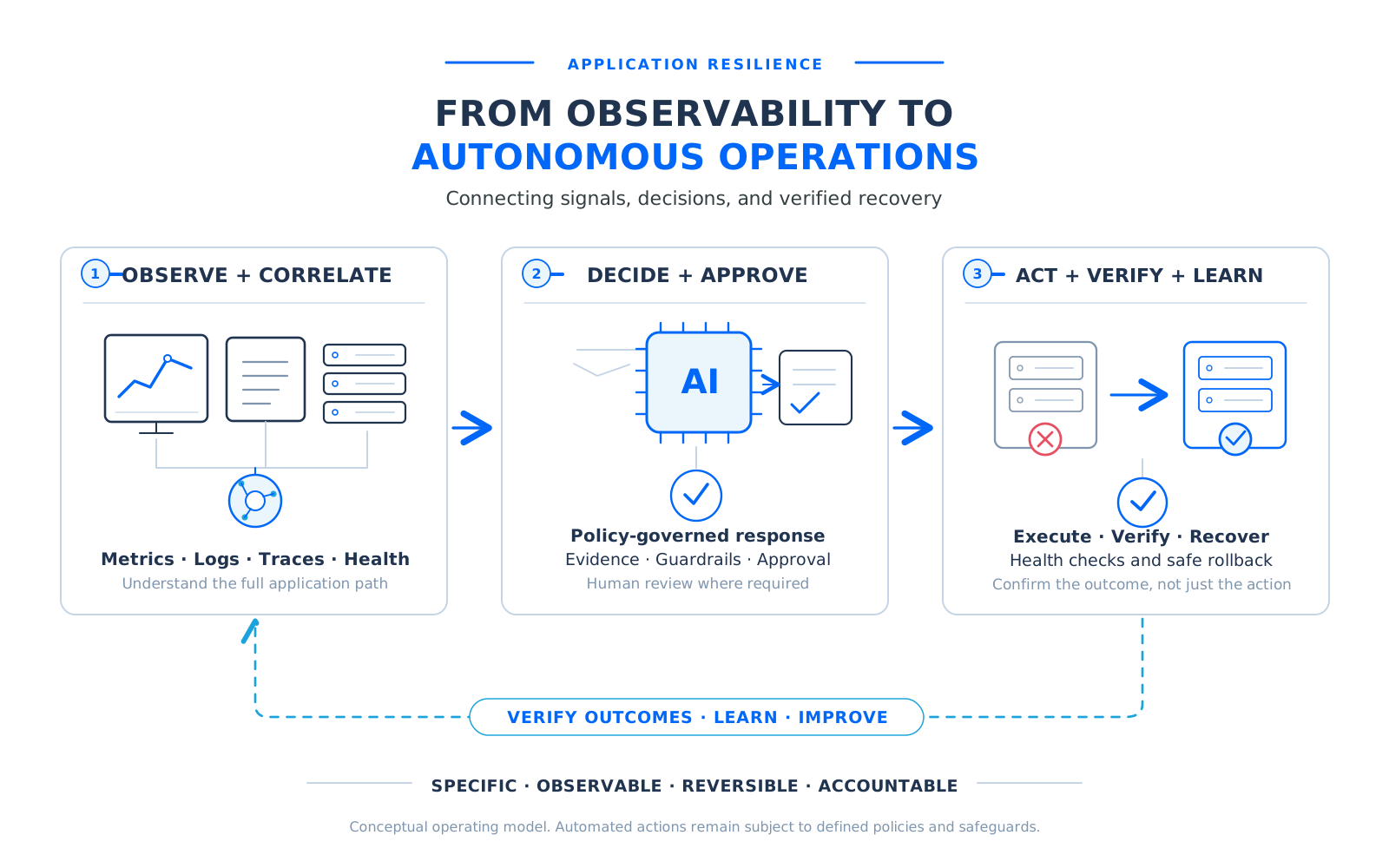
A more intelligent operating model connects these activities into a continuous process:
Observe and correlate → Decide and approve → Act, verify, and learn
Each stage serves an important purpose. Observability provides the initial evidence, while correlation helps establish relationships between events across different systems. Decision-making determines the appropriate response, with human approval required where necessary. Automation can then execute an authorized action, followed by verification to confirm that the intended outcome has been achieved.
Of course, none of these stages is without risk. Monitoring information can be incomplete or delayed. Correlation can mistake coincidence for causation, and even a technically correct remediation action can have unintended consequences elsewhere in the environment.
This is why verification is just as important as execution. An automated response should never be considered successful simply because a command was completed. The system needs to confirm that the action delivered the expected result and be able to respond appropriately if it didn’t.
Application Resilience Requires an End-to-End View
One of the biggest challenges in modern infrastructure management is that application performance rarely depends on a single component.
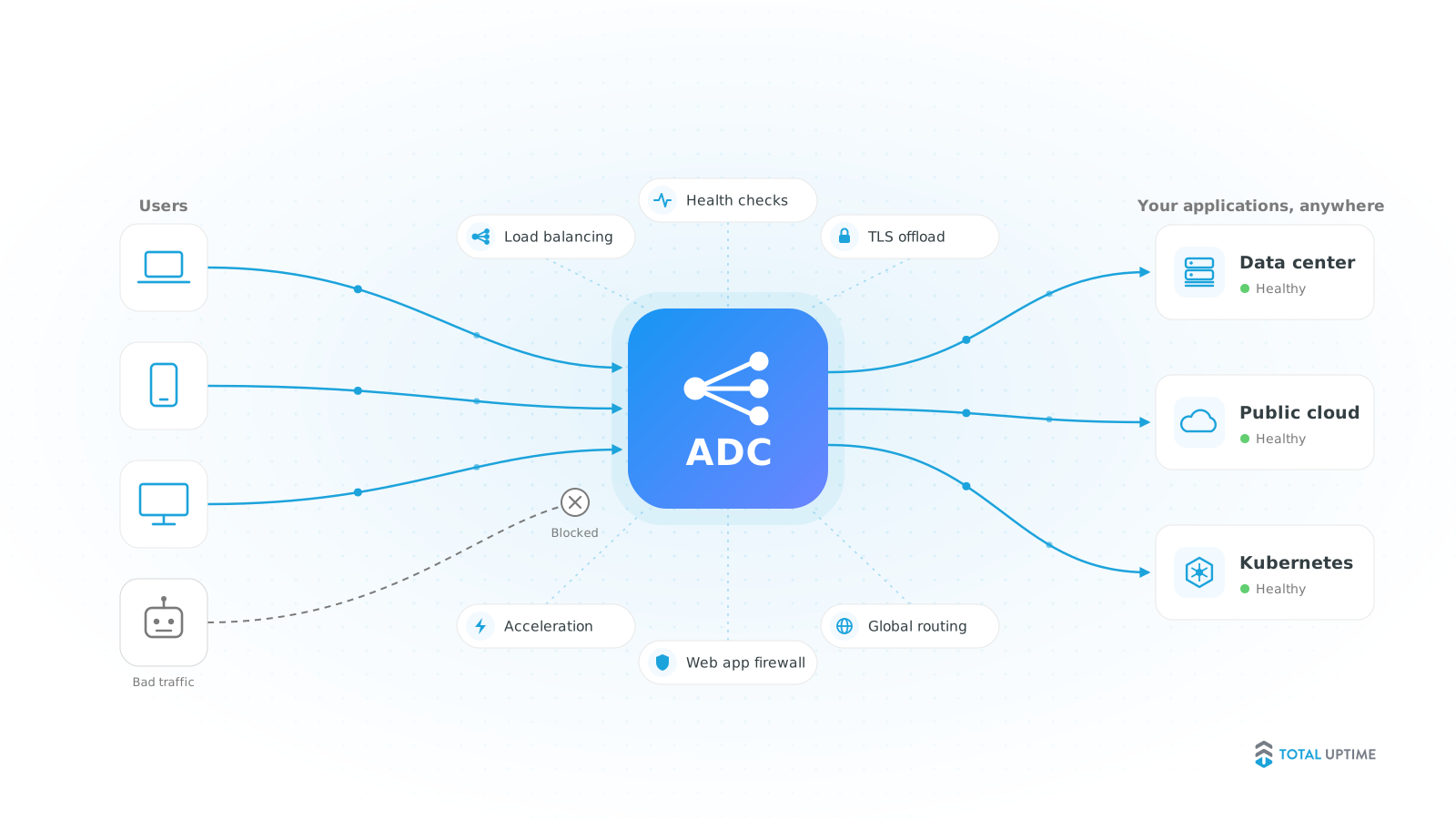
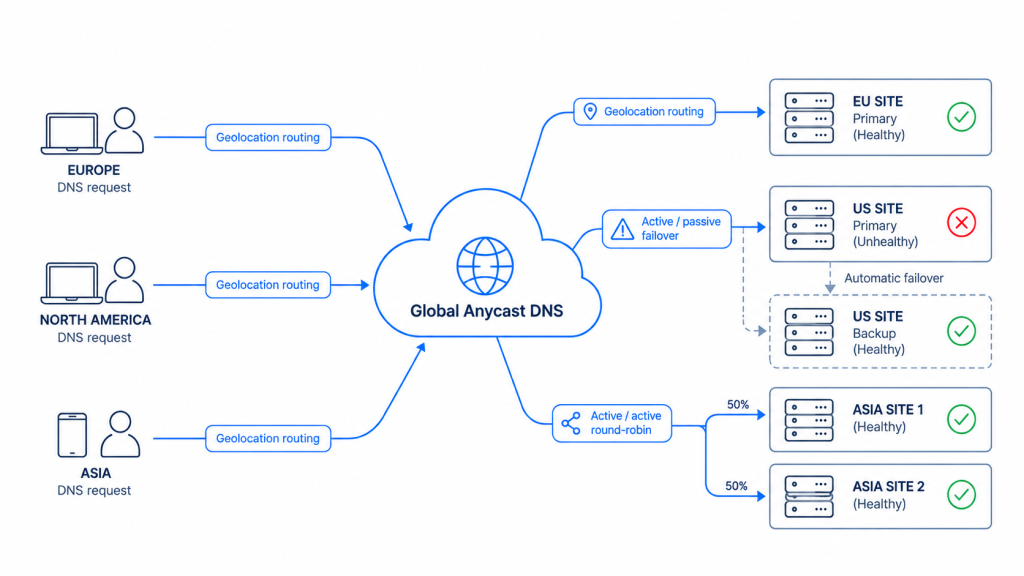
An application might be running perfectly well on its origin server while users continue to experience slow response times or intermittent failures. The underlying issue could involve load balancing, DNS resolution, network routing, TLS connections, security policies, cloud capacity, or an external service dependency.
Looking at any one of these components in isolation may not reveal the full problem.
This becomes particularly important in hybrid and multicloud environments, where applications and their supporting services are distributed across different infrastructure providers, networks, and locations. A problem that appears to originate in one environment may actually be caused by a dependency elsewhere.
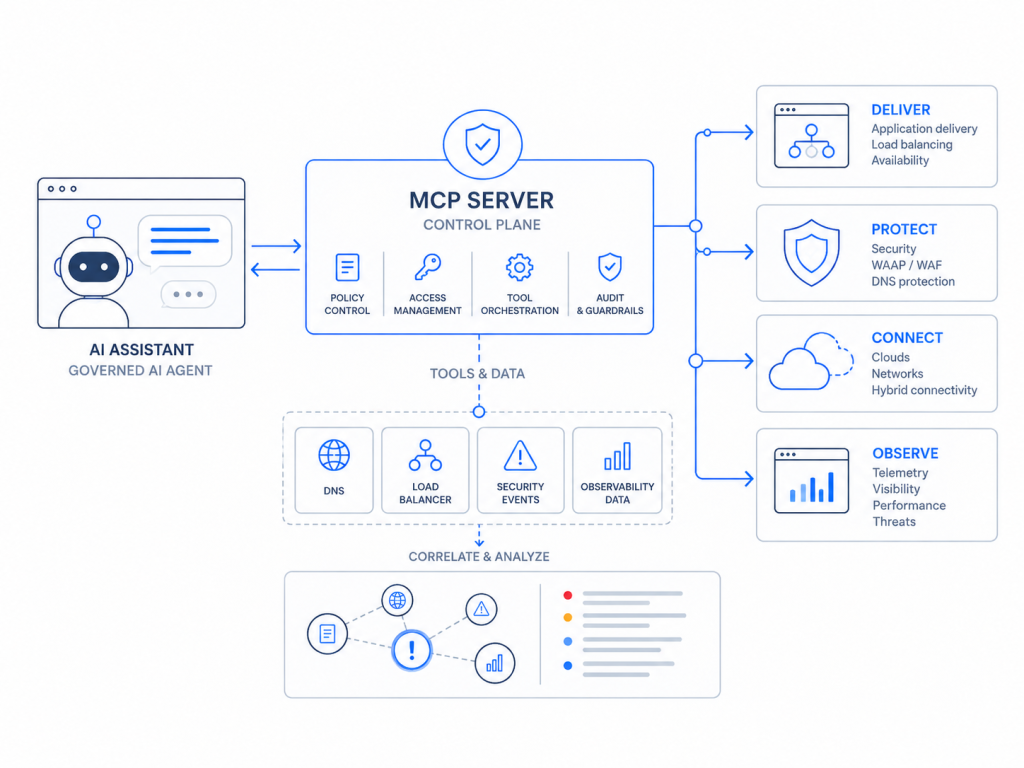
At Total Uptime, we approach application delivery through four connected capabilities: Deliver, Protect, Connect, and Observe.
Together, these capabilities provide a framework for understanding the different elements that influence application availability, performance, connectivity, and security.
From an operational perspective, this encourages teams to look beyond individual dashboards and consider the complete application delivery path. Rather than treating DNS, load balancing, networking, and security as unrelated operational functions, the goal is to understand how their behavior collectively affects the user experience.
That broader context becomes increasingly valuable when introducing intelligent automation. Before a system can recommend an effective response, it needs sufficient evidence to understand which component is contributing to the problem and how a proposed change might affect the rest of the environment.
The Role of AI Agents in Operational Decision-Making
AI agents introduce an interesting opportunity to improve how operational information is gathered, interpreted, and acted upon.
Instead of requiring an engineer to manually consult several systems, an AI agent with authorized access to selected tools could assemble relevant information, compare signals, and recommend an appropriate course of action.
Consider a load balancing environment where one application server begins experiencing health problems.
An agent could examine origin health information alongside traffic distribution data, identify the affected pool member, and recommend an approved traffic-management workflow. Rather than leaving the engineer to investigate each system separately, the agent could help bring the relevant evidence together and explain the reasoning behind its recommendation.
In an environment with sufficiently mature operational controls, a predefined, low-risk workflow might even be executed automatically.
The affected server could be removed from active traffic distribution, followed by health checks to confirm that the remaining application endpoints are responding as expected. If the action fails to achieve the intended result, the workflow should provide a way to reverse the change or escalate the issue.
The value here isn’t that AI is making decisions without oversight. It’s that AI-assisted reasoning can help reduce the time spent gathering evidence and identifying suitable responses.
However, the distinction between recommending an action and executing one is important.
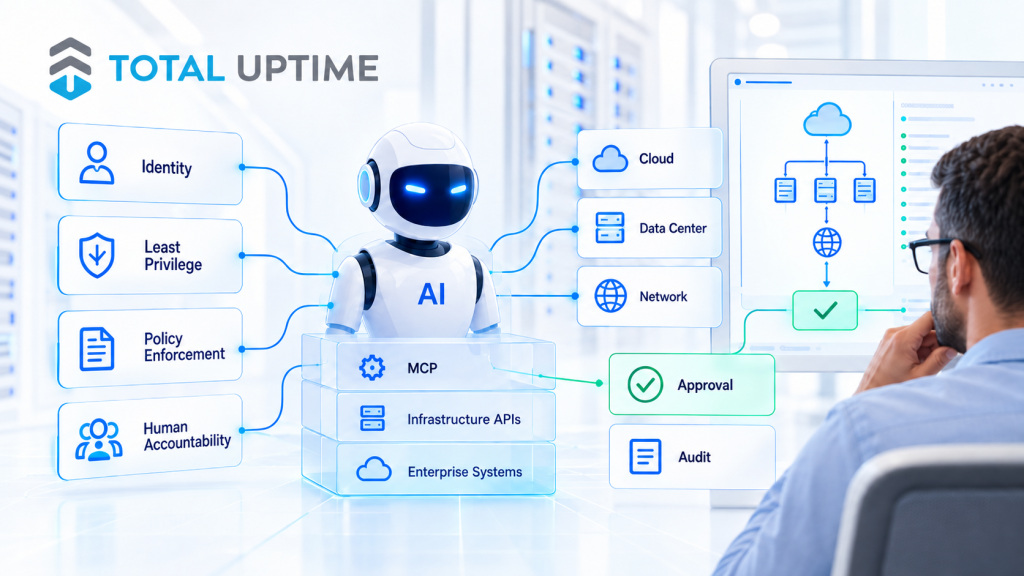
An agent that can analyze infrastructure data is not necessarily an agent that should be authorized to change infrastructure. Those are different levels of responsibility, and they require different levels of control.
Why Autonomous Operations Must Be Introduced Gradually
It’s tempting to imagine an AI agent that can investigate an outage, identify the cause, and fix everything without human involvement.
In practice, that is neither a realistic starting point nor a sensible operational strategy.
Autonomy needs to be earned through testing, operational maturity, and clearly defined boundaries.
The first step is establishing reliable visibility across the environment. Teams need confidence in the quality of their monitoring data and the relationships between the systems being observed.
From there, AI-assisted recommendations can help engineers interpret complex information and evaluate potential responses while retaining human oversight of operational changes.
The next stage is automating well-understood, repeatable tasks through predefined runbooks. These workflows should be thoroughly tested, governed by clear policies, and supported by appropriate safeguards, verification procedures, and rollback mechanisms.
Only when those foundations are established should organizations consider allowing AI agents to initiate narrowly defined actions without individual human approval.
For example, automatically executing a tested traffic-management workflow under specific, measurable conditions is very different from giving an AI agent unrestricted administrative access and asking it to “fix the outage.”
The former can be governed, measured, and reversed. The latter introduces unnecessary uncertainty into an environment where reliability is the primary objective.
Good autonomy should always be specific, observable, reversible, and accountable.
Organizations also need to recognize that not every operational decision should be automated. Complex incidents, significant infrastructure changes, and situations involving incomplete or conflicting evidence may still require experienced engineers to assess the risks and determine the appropriate response.
The aim is to reduce unnecessary manual intervention, not to remove human judgment from critical operations.
Measuring Whether Automation Is Actually Improving Resilience
Introducing AI and automation into infrastructure operations should deliver measurable improvements, not simply create a more sophisticated way of managing the same problems.
Traditional operational metrics remain important. Mean time to detect, mean time to identify, and mean time to recover can help organizations understand how efficiently incidents are being recognized, investigated, and resolved.
However, those measurements need to be considered alongside application availability, customer impact, and the quality of the actions taken.
A system that responds to an incident in seconds but causes additional service disruption has not improved resilience.
This is why organizations should also measure the operational consequences of automation. How frequently do automated actions produce false positives? How many incidents are caused by changes intended to resolve another problem? What percentage of automated actions are independently verified, and how often do engineers need to intervene or override a decision?
These measurements provide a more complete picture of whether autonomous operations are delivering genuine value.
Speed matters, particularly when customers are affected by an outage. But the objective should always be faster, more reliable recovery rather than automation for its own sake.
What the Next Generation of Application Operations Looks Like
As AI becomes more deeply integrated into infrastructure management, the responsibilities of engineering teams will evolve.
Experienced engineers will remain essential, but more of their time can be directed toward architecture, reliability engineering, policy development, and handling exceptional situations that require deeper investigation.
Reliable automation can take responsibility for repetitive, well-understood operational tasks, while AI agents can support engineers by interpreting complex signals, identifying patterns, and recommending appropriate actions.
These capabilities work best when they complement one another.
AI should not be expected to compensate for poorly designed infrastructure, unreliable monitoring, or inadequate change management. In fact, introducing autonomous capabilities without addressing those underlying weaknesses may simply allow problems to develop more quickly.
The strongest operating model combines skilled engineers, dependable automation, and AI-assisted reasoning within a clearly governed environment.
Importantly, this isn’t a complete departure from established operational practices. It’s a natural progression of site reliability engineering, incident response, and change management, supported by increasingly intelligent tools.
The principles that have always mattered in infrastructure operations, including accountability, testing, controlled changes, and recovery planning, remain just as relevant.
What changes is how quickly those principles can be applied when something goes wrong.
The Future Is About Better Decisions, Not Less Human Involvement
The ultimate goal of autonomous operations isn’t to create an entirely unattended data center where AI makes every decision.
It’s to build an application delivery environment where useful information moves quickly from observation to understanding, and from understanding to an appropriate, verified response.
For enterprise leaders, the opportunity is to reduce the time and effort required to investigate and resolve incidents while maintaining confidence in the decisions being made.
That progress should happen incrementally, beginning with better visibility, moving toward intelligent recommendations, and introducing carefully governed automation wherever it can demonstrate a clear operational benefit.
AI agents will undoubtedly play a growing role in this process, but their success will depend on the quality of the information they receive, the controls governing their actions, and the ability to verify the results.
Ultimately, the measure of success isn’t how many operational tasks an AI agent can perform independently.
It’s whether applications remain available, recover faster when problems occur, and deliver the experience customers expect.
And that is where autonomous operations have the potential to make a meaningful difference.
Explore the Total Uptime MCP Server
Discover how Total Uptime is approaching governed AI connectivity across application delivery and infrastructure operations.