Keep applications available, protected and connected wherever they run with application delivery built around your infrastructure. Total Uptime brings together traffic management, DNS, load balancing, application security and resilient connectivity across managed cloud and self-hosted environments.
Cloud + Self Hosted
24×7 Human Support
Global Infrastructure
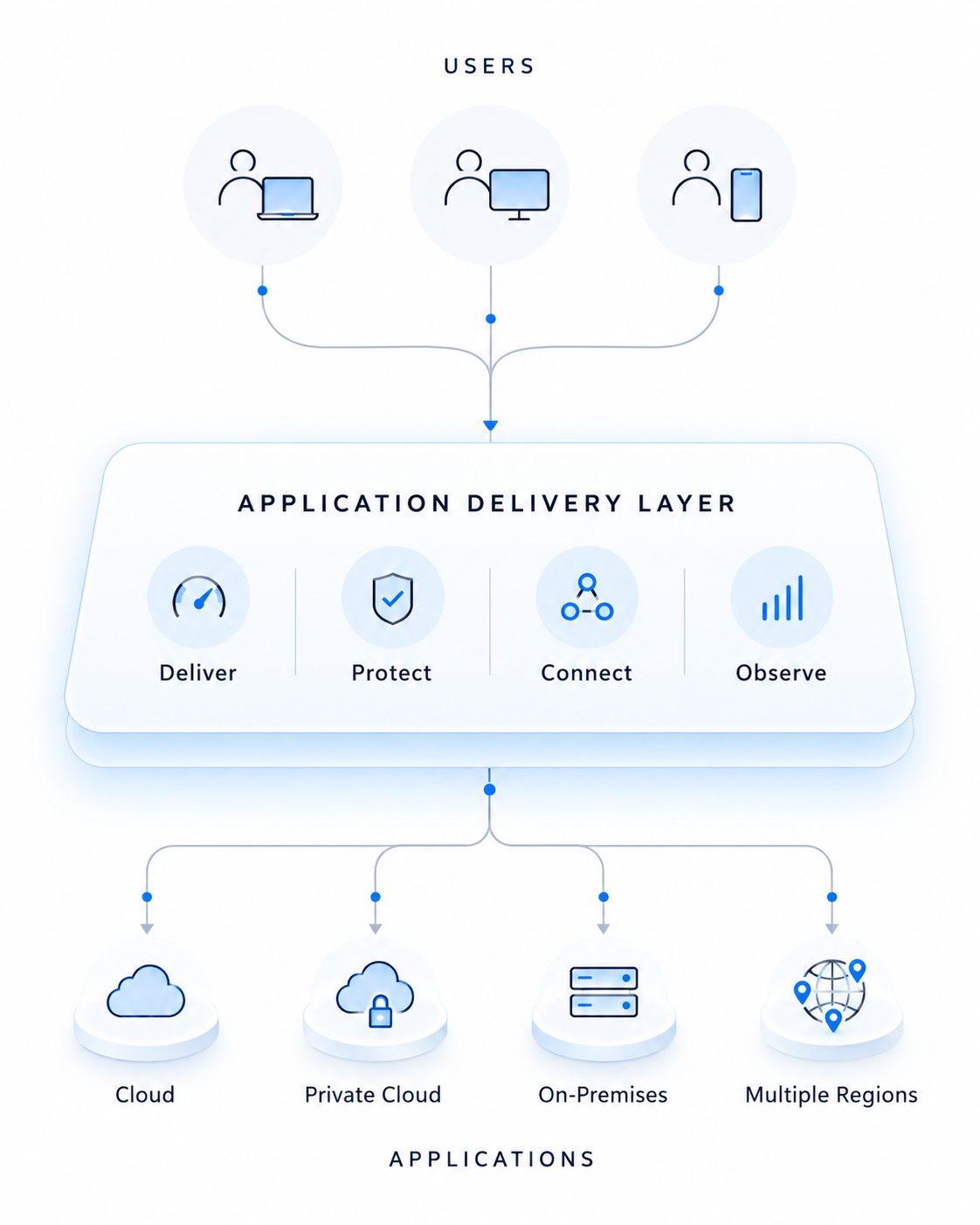
Application delivery is the technology and infrastructure responsible for connecting users to applications reliably, securely and efficiently.
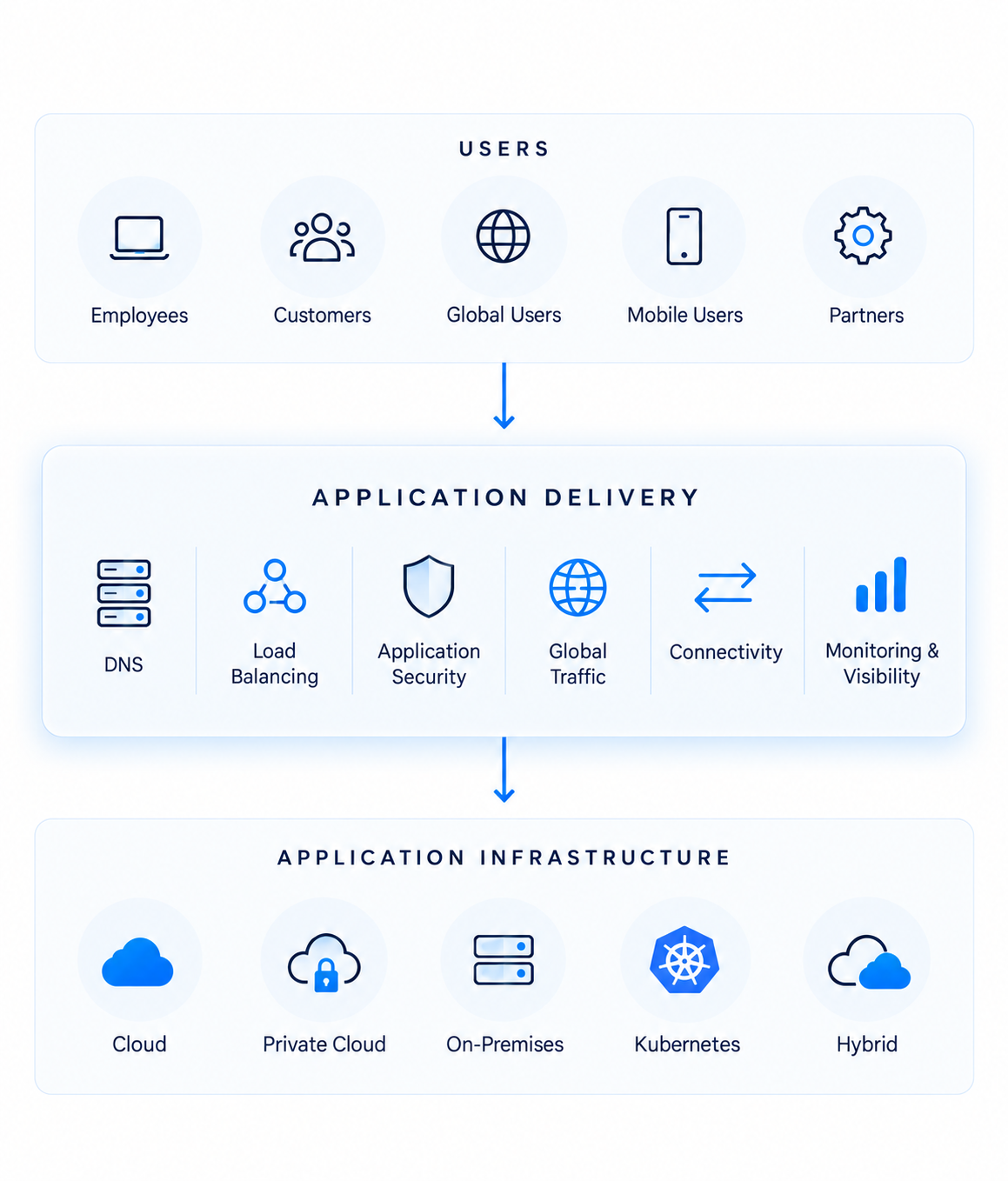
It sits between users and the systems running an application, helping determine where traffic should go, whether an application endpoint is healthy, how requests should be protected and what should happen when infrastructure becomes unavailable. Modern application delivery can include DNS, load balancing, global server load balancing, application delivery controllers, application security, traffic management, network connectivity, health monitoring and failover.
Load balancing is an important component, but modern application delivery extends across the entire journey between the user and the application.
Applications might run in a public cloud, a private data center, several cloud providers, Kubernetes, SaaS infrastructure or a mixture of all of them. Users still expect the same thing.
Users do not care whether a request is being served from Virginia, London, Azure, AWS or the rack downstairs. But for infrastructure teams, every additional environment introduces more dependencies:
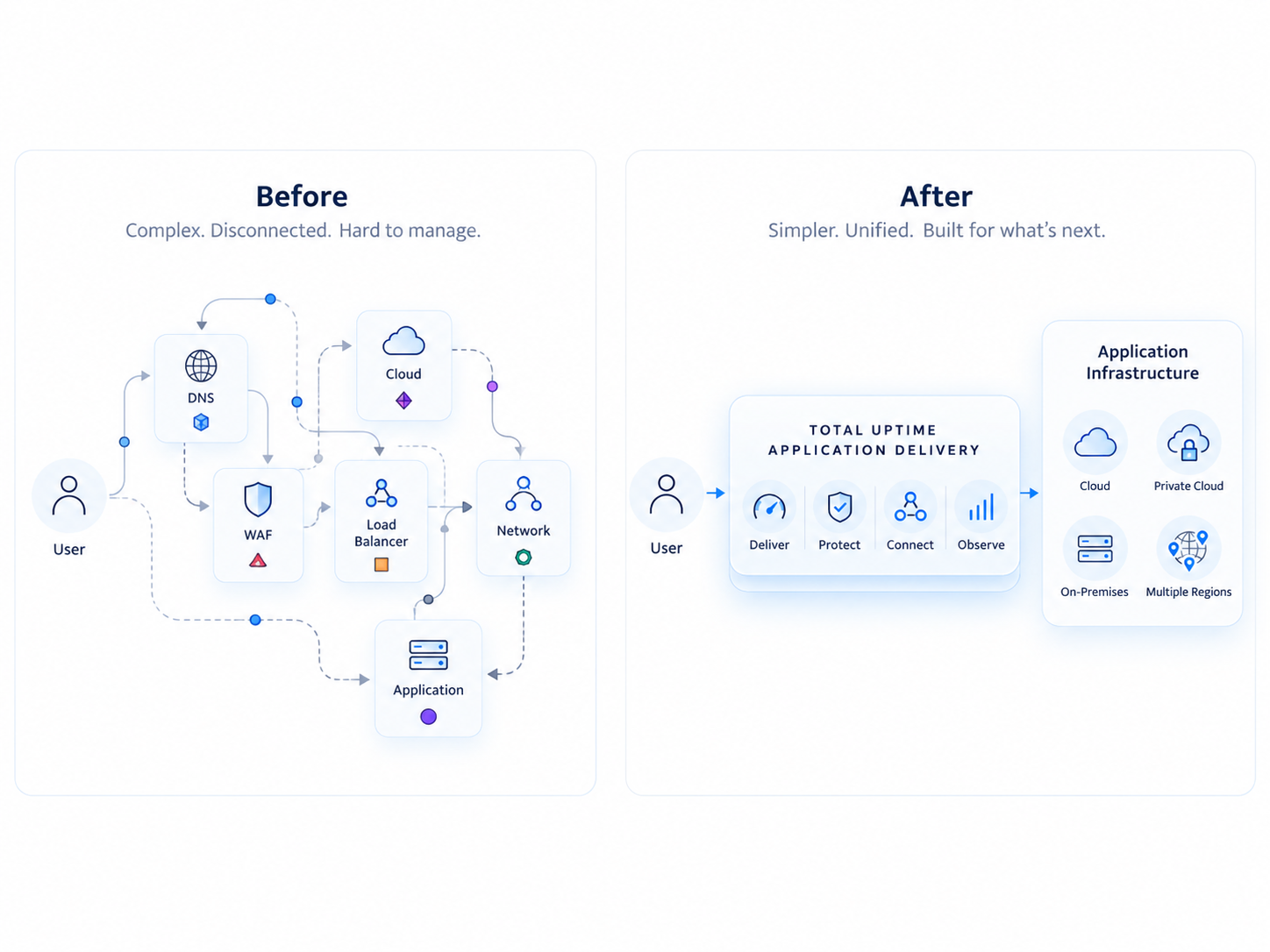
DNS. Load balancers. Firewalls. APIs. Networks. Cloud platforms. Regions. Providers.
When those services are managed separately, application delivery becomes harder to operate, troubleshoot and protect.
Total Uptime brings the services responsible for delivering applications closer together, so infrastructure teams can build around the architecture their applications actually require. Start with one service. Combine several. Run application delivery on our infrastructure, inside your own environment, or across both. You do not need to redesign your application architecture around the application delivery vendor.
Direct, distribute and manage application traffic using technologies including DNS, load balancing, ADC and global server load balancing.
Add application-layer protection with WAF, WAAP and DNS security capabilities appropriate to your environment.
Build resilient connectivity between clouds, networks, data centers and application environments without tying application delivery to a single location.
Use health information, traffic behavior and application delivery data to make better routing, availability and infrastructure decisions.
Distribute application traffic across healthy infrastructure to improve availability, performance and resilience.
Direct users between data centers, clouds and geographic locations based on health, availability and routing policy.
Control, optimize and manage application traffic with Layer 4–7 load balancing, health monitoring and advanced traffic management.
Give users a reliable route to your applications with authoritative DNS, intelligent routing and DNS-based failover.
Protect internet-facing applications and APIs against malicious application-layer traffic.
Connect distributed application infrastructure across clouds, networks and data centers.
Use Total Uptime’s globally distributed infrastructure for application delivery services without deploying and maintaining the underlying platform yourself.
Total Uptime manages the infrastructure, capacity, monitoring and updates, backed by 24×7 engineering support.
Best for: Internet-facing applications, SaaS platforms, distributed services and teams that want application delivery as a managed service.
Deploy application delivery technology within your own data center, private cloud or controlled infrastructure.
Maintain control over application traffic, infrastructure location and operational policy while using capabilities including ADC, load balancing, GSLB and WAF.
Best for: Regulated workloads, private infrastructure, internal applications, data sovereignty requirements and environments where cloud dependency is not appropriate.
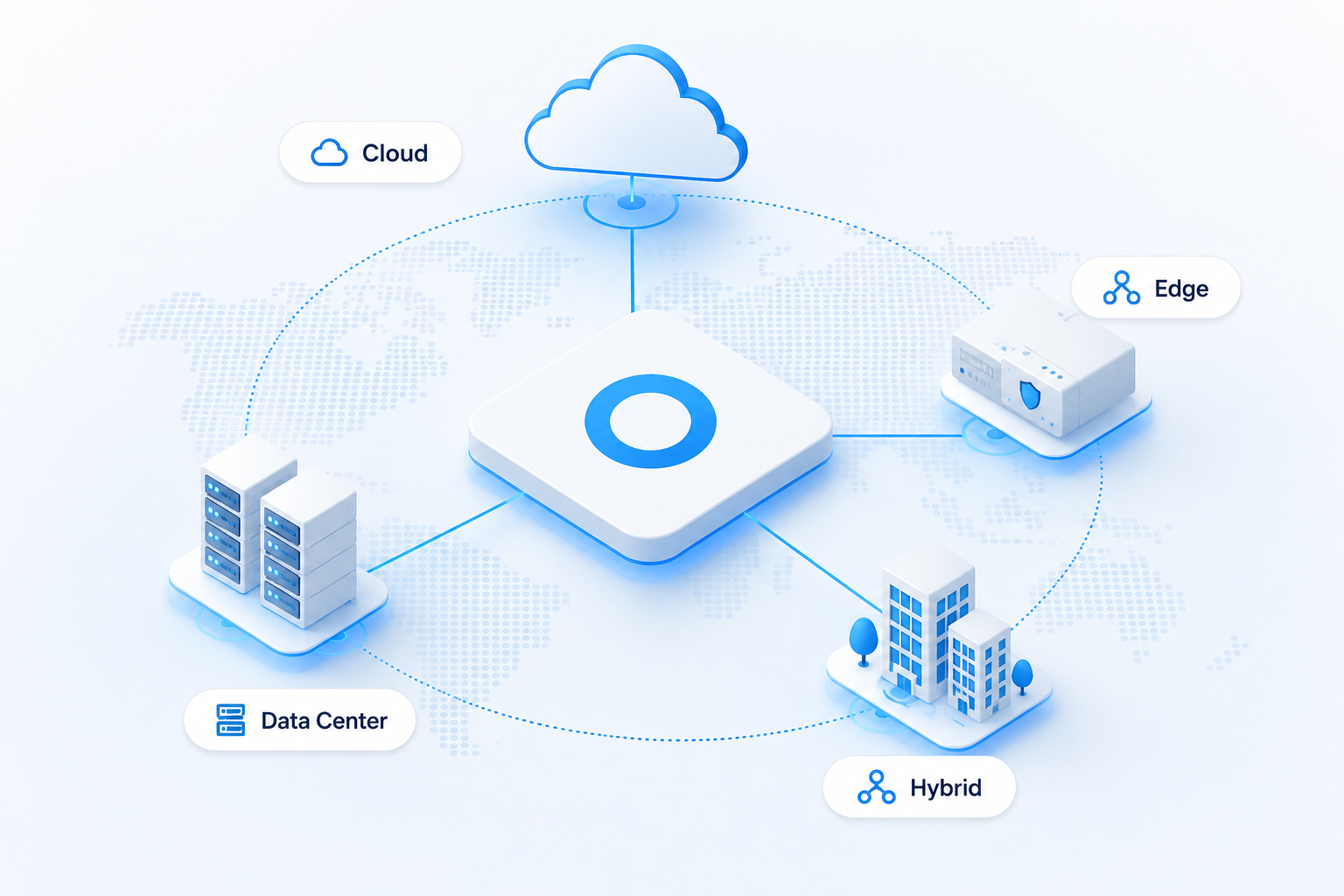
Combine managed and self-hosted application delivery across the same application estate.
Use cloud services where they make sense and retain application delivery inside your own environment where control, compliance or architecture requires it.
Best for: Hybrid infrastructure, cloud migrations, distributed applications and organizations operating across multiple environments.
Monitor application infrastructure and direct traffic away from failed or unhealthy resources.
Distribute application services across servers, locations, providers or clouds so one infrastructure failure does not have to become an application outage.
Deliver applications consistently when workloads span public cloud, private cloud and on-premises infrastructure.
Distribute traffic intelligently as application demand increases or infrastructure capacity changes.
Use DNS, GSLB and load balancing to redirect users toward available secondary infrastructure when primary environments become unavailable.

Introduce application and API security into the delivery path before malicious traffic reaches application infrastructure.
Managed cloud, self-hosted or hybrid.
Add application delivery capabilities without replacing your entire infrastructure stack.
Bring networking, traffic management, application security and availability expertise together rather than coordinating multiple specialist vendors.
Self-service where it makes sense, with 24×7 access to experienced technical support when the problem requires a person.
Quick answers to the questions infrastructure teams ask most.
Application delivery is the combination of technologies and services used to connect users to applications reliably, securely and efficiently. It can include DNS, load balancing, global traffic management, application delivery controllers, application security, connectivity, monitoring and failover.
An application delivery solution manages the path between users and applications. Depending on the architecture, it can distribute traffic, monitor application health, redirect requests around failures, protect applications and APIs, and improve application performance and resilience.
No. Load balancing is one part of application delivery. Application delivery can also include DNS, GSLB, ADC capabilities, traffic management, application security, connectivity and failover.
An Application Delivery Controller, or ADC, manages traffic between users and application servers. Modern ADCs commonly provide Layer 4–7 load balancing, health monitoring, traffic management, SSL/TLS functions, application acceleration and related application delivery capabilities.
Yes. Application delivery can operate across public cloud, private cloud, data center and hybrid infrastructure. The appropriate deployment model depends on where the applications run and the organization’s requirements for control, availability, security and management.
Managed application delivery uses infrastructure operated by a service provider to provide capabilities such as load balancing, DNS, global traffic management, security and connectivity without the customer operating the underlying application delivery infrastructure.
Self-hosted application delivery places the application delivery technology within infrastructure controlled by the organization, such as its data center, private cloud or cloud account.
Application delivery technologies can monitor infrastructure health and redirect traffic toward available resources when servers, locations or application endpoints fail, reducing the dependency on any individual infrastructure component.
Real organisations. Real resilience. Real results.
Our team found that implementation went very smoothly, and Total Uptime support staff was always ready and willing to help within minutes.
Director, Product Operations, Informatica
We chose Total Uptime for its advanced functionality, cost effective pricing and superb pre-sales experience. The intuitive configuration and ‘dead-easy’ deployment were also significant factors in our purchasing decision.
Senior Systems Analyst, MIC
Yes, the load balancer rocks. But for us, the stand-out feature is the team behind it. Edgenexus support is fast, responsive, and deeply knowledgeable, a true extension of our IT department.
IT System and Asset Manager, 4D Interactive Ltd
Having technically reviewed the solutions available in the market place, we felt that Total Uptime hit all the functionality of the big players, at a very reasonable price point for the feature set available.
IT Operations Manager,
UNITE Group
Build an application delivery architecture around the infrastructure you already have, whether that’s cloud, on-premises or both.