Distribute application traffic across healthy servers, sites and clouds. Total Uptime gives you flexible load balancing for cloud, on-premises and hybrid infrastructure, with health monitoring, intelligent traffic distribution and failover built around application availability.
Layer 4 & Layer 7
Managed or Self Hosted
Health-Aware Failover
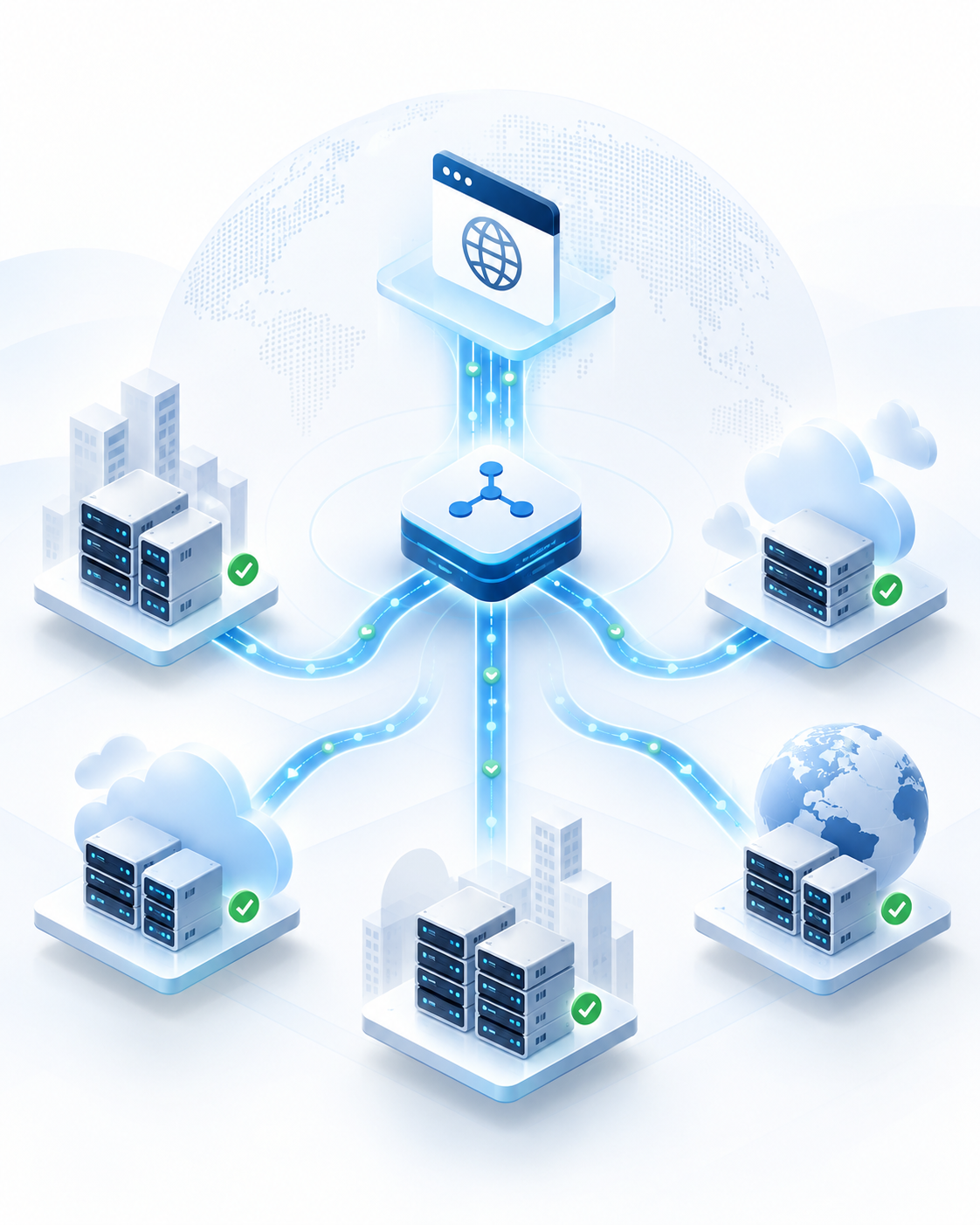
Applications rarely run on a single server anymore. They depend on multiple application servers, APIs, clouds, data centers and network connections. The challenge is making sure users are always sent somewhere healthy. Load balancing sits between users and your application infrastructure, distributing traffic across available resources so that one overloaded server, failed endpoint or infrastructure problem does not automatically become an application outage.
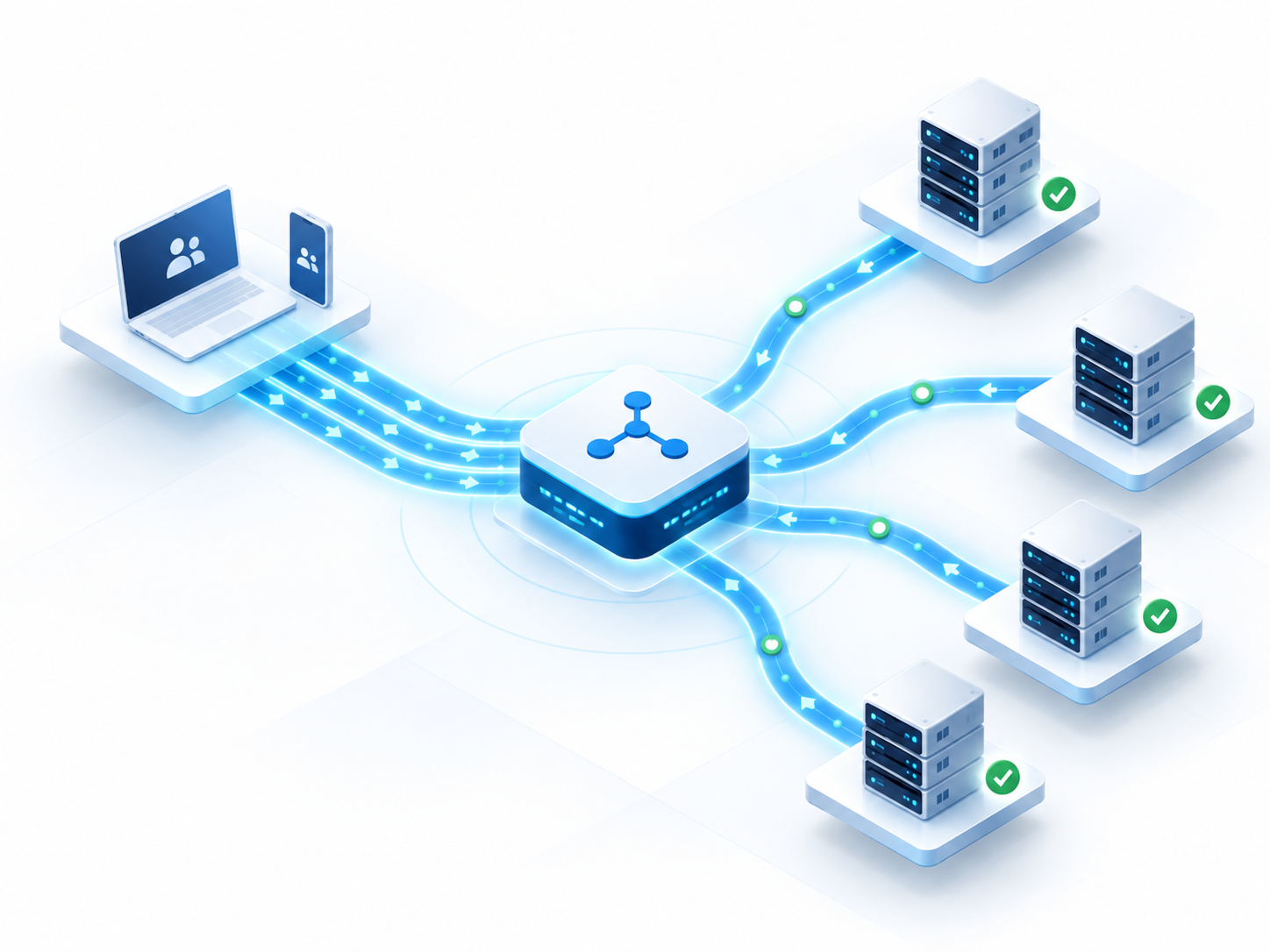
Distribute requests across multiple servers instead of allowing one resource to become the bottleneck.
Continuously check infrastructure health and stop sending traffic to endpoints that can no longer serve the application correctly.
Spread traffic across available capacity as application usage and request volumes change.
Design applications around multiple healthy endpoints rather than relying on a single server, location or provider.
Load balancing is the process of distributing incoming application or network traffic across two or more servers or endpoints.
A load balancer monitors the resources delivering an application and uses defined routing policies to decide where each connection or request should go.
If a server becomes unavailable, overloaded or fails a health check, traffic can be directed toward another healthy resource.
Run load balancing on Total Uptime’s managed infrastructure without deploying or maintaining the underlying platform yourself.
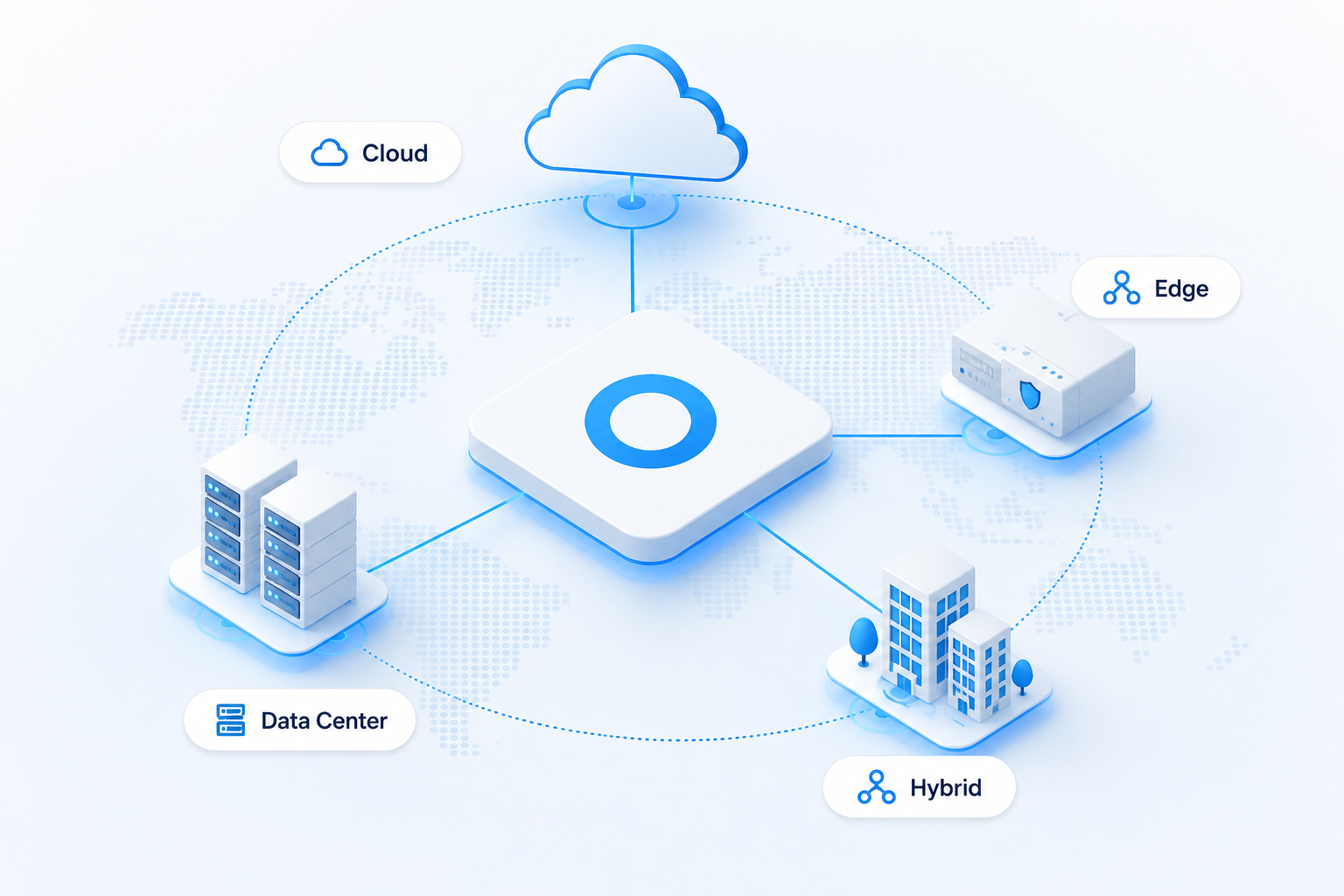
Distribute traffic across servers, data centers and cloud environments using Layer 4 and Layer 7 load balancing, health monitoring, traffic policies, session persistence and automated failover.
Best suited to:
Organizations that want resilient application traffic management without operating their own load balancer infrastructure.
Deploy application load balancing inside infrastructure you control, including data centers, private cloud and public cloud environments.
edgeADC combines Layer 4–7 load balancing with health monitoring, application traffic management, SSL offload, acceleration and high-availability capabilities.

Best suited to:
Organizations that want direct control of their application delivery infrastructure.
For organizations looking for broader managed application delivery capabilities without operating their own ADC infrastructure, Total Uptime also provides ADC-as-a-Service.
Users or applications connect to the service through a virtual IP, hostname or other application endpoint.
Health monitors determine whether the servers or services behind the application are actually ready to receive traffic.
The load balancer applies the appropriate routing method, persistence rule or application policy to select a healthy destination.
If an endpoint becomes unhealthy, new requests can be directed toward available infrastructure instead.
Distribute connections sequentially across available servers.

Direct new connections toward the server currently handling the fewest active connections.

Use application or server responsiveness to help determine where traffic should be sent.
Give higher-capacity infrastructure a greater share of incoming traffic.
Keep users associated with the appropriate backend resource when an application requires session affinity.
Load balancing and Global Server Load Balancing solve related problems at different levels.
Distributes traffic across application resources within a service or environment.
Makes traffic-routing decisions across multiple locations, regions, data centers or clouds. A resilient application architecture can use both. For example, GSLB can direct a user toward the right application location, while a load balancer within that location distributes traffic across the healthy servers delivering the application.
Traffic decisions are designed around keeping applications reachable when infrastructure changes or fails.
Let Total Uptime operate the service or deploy application delivery inside infrastructure you control.
Build across servers, sites and providers rather than making one infrastructure platform the center of your availability strategy.
Total Uptime provides 24×7 phone and email support, with engineers who understand the application delivery platform
Quick answers to the questions infrastructure teams ask most.
A load balancer receives incoming traffic and distributes it across multiple application servers or endpoints. It can use server health, current connections, response times and other rules to determine where traffic should be sent.
Load balancing reduces dependence on individual servers by distributing traffic across multiple healthy resources. If one resource fails or becomes unavailable, traffic can be directed toward other healthy endpoints.
A load balancer can reduce downtime caused by individual server or application failures, but application availability also depends on other components such as DNS, networks, data centers and cloud infrastructure. A complete availability strategy should consider the entire application delivery path.
Layer 4 load balancing makes traffic decisions using network information such as IP addresses and ports. Layer 7 load balancing understands application protocols such as HTTP and HTTPS and can make more application-aware routing decisions.
Load balancing typically distributes traffic across servers or services within an application environment. Global Server Load Balancing distributes traffic across multiple locations, data centers, clouds or regions.
Yes. Total Uptime provides managed and self-hosted application delivery options for cloud, on-premises and hybrid environments.
Managed load balancing is suited to organizations that do not want to operate the underlying platform themselves. Self-hosted load balancing is better suited to environments where the organization needs direct control of the application delivery infrastructure.
Real organisations. Real resilience. Real results.
Our team found that implementation went very smoothly, and Total Uptime support staff was always ready and willing to help within minutes.
Director, Product Operations, Informatica
We chose Total Uptime for its advanced functionality, cost effective pricing and superb pre-sales experience. The intuitive configuration and ‘dead-easy’ deployment were also significant factors in our purchasing decision.
Senior Systems Analyst, MIC
Yes, the load balancer rocks. But for us, the stand-out feature is the team behind it. Edgenexus support is fast, responsive, and deeply knowledgeable, a true extension of our IT department.
IT System and Asset Manager, 4D Interactive Ltd
Having technically reviewed the solutions available in the market place, we felt that Total Uptime hit all the functionality of the big players, at a very reasonable price point for the feature set available.
IT Operations Manager,
UNITE Group
Show one of our application delivery engineers how your environment works today and we’ll help you identify the right managed, self-hosted or hybrid approach.